Short answer: a new garage door in Houston is not the same purchase it is in a dry climate, and the difference is worth understanding before you order anything. This is a Gulf Coast city: the door is the largest opening on the house, it faces the summer sun and the hurricane season, and the builder-grade door most Houston homes were sold with was chosen to close a deal, not to survive a decade of this heat and humidity. A new door bought here is a decision about insulation, wind rating, and hardware that will not rust — not just about how the front of the house looks. This page is the Houston-specific version of that decision: what actually fails on the doors this metro was built with, what a replacement should be built to handle, and where the honest line between repairing and replacing falls once you factor in the climate.
Why Houston doors fail differently from the rest of the country
Most of what wears a garage door out is not the door itself — it is the environment it sits in, and Houston’s environment is unusually hard on the hardware. The two things that shorten a door’s life here are the same two things that make the city what it is: heat and water.
Heat. An unconditioned Houston garage in July is one of the hottest enclosed spaces in the house, and the door is the surface that takes the brunt of it. The steel skins of an insulated door expand and contract through a wider temperature swing than the manufacturer’s temperate-average rating assumes, the foam core between them can delaminate over enough summers, and the springs that counterbalance the door lose temper faster in sustained heat — which is a large part of why Houston springs rarely reach their rated cycle count. A door that was fine in a milder climate simply does not last as long here.
Water. Gulf humidity is not a cosmetic nuisance; it is a corrosion engine. The bottom edge of the door rests on a concrete slab that holds moisture for much of the year, and rust works its way up from that contact line. Salt-laden air does the same from the outside in on the doors closest to the bay — toward Clear Lake, Seabrook, and the southeast side near Galveston Bay — while inland garages rust from the damp slab up. Springs, cables, rollers, and hinges all live in that air, and they all wear faster for it. A door built with galvanized or coated hardware is not a luxury here; it is the difference between a ten-year door and a twenty-year one.
None of this means a new door is a bad idea — it means the door you buy should be chosen for this climate, not for a showroom in a drier state. The sections below cover what that actually means in practice.
The two kinds of door Houston was built with, and why both end up replaced
Houston’s garage doors fall into two very different populations, and each one fails in its own way.
Old inner-loop stock. The Heights, Montrose, River Oaks, West University, and the bungalow belts still carry a fair share of pre-code doors — thin-gauge single-skin steel and the occasional wooden panel, most of them hung long before today’s wind standards existed. They are often uninsulated, and they typically show rust creeping up from the bottom edge plus heat damage in whatever foam they carry. In many cases they are simply past the point where repair makes sense — a new section bolted into a thirty-year-old door is good money after old hardware, and the honest recommendation is usually a full replacement.
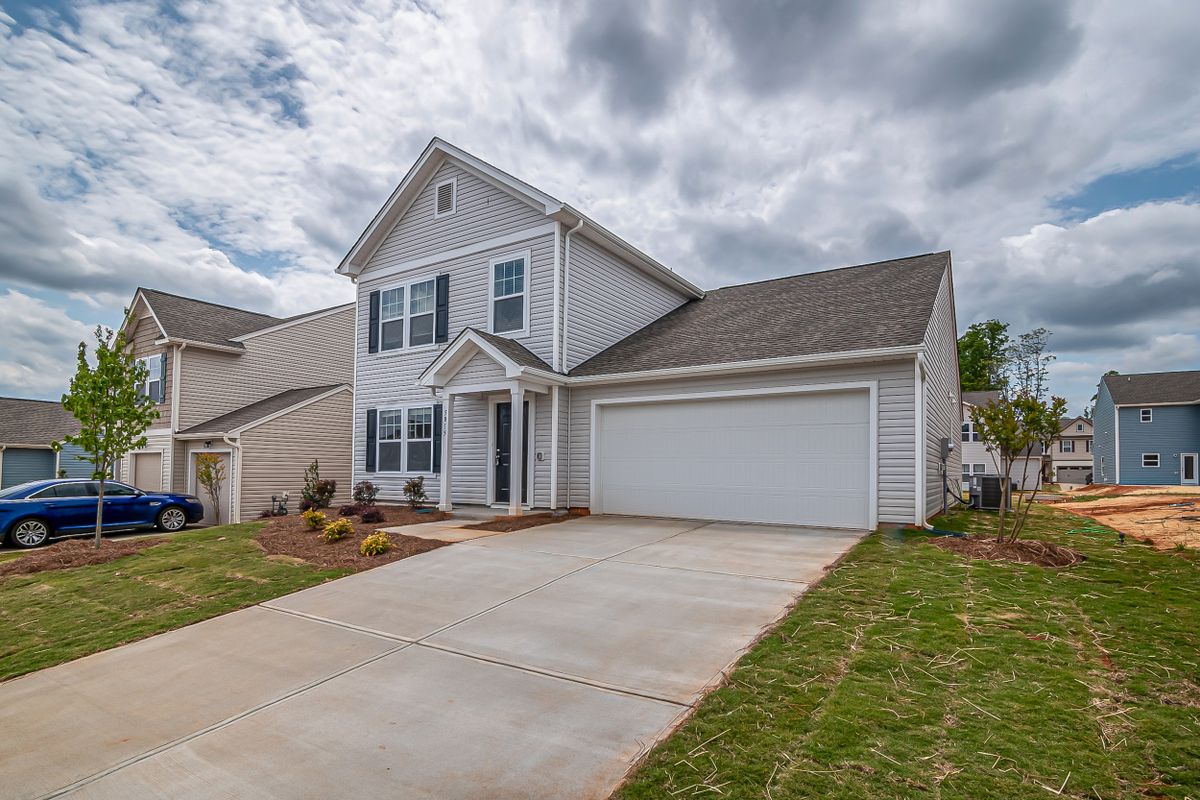
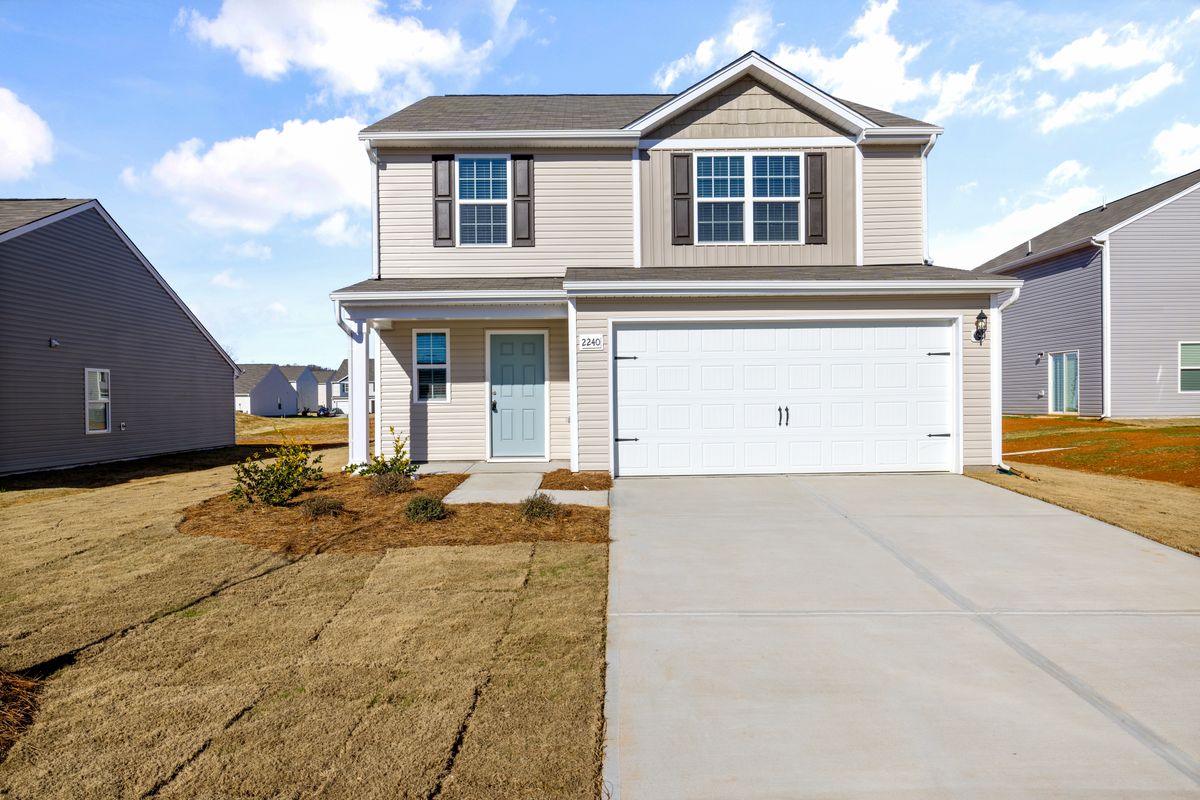
Builder-grade doors in the newer build-out. The post-2000 subdivisions across the west and northwest corridors — Katy, Cypress, Sugar Land, Pearland, and the master-planned communities — were sold with builder-spec insulated sectional doors. These are not bad doors; they are specified to a budget, and the specification is a house that has just been built. A decade or so in, the same pattern shows up across a whole subdivision at once: the springs have lost temper, the bottom sections have rusted from the slab up, and the hardware has worn together. Because the doors in a section were installed by the same crew from the same order, they fail as a cohort — which is why, when one door on your street is replaced, two or three more within a few blocks tend to follow over the next couple of seasons.
Both populations end up at the same place: a door that is old, tired, and no longer worth repairing. The question is what to replace it with.
Insulation is the first decision, and it is a Houston decision
If there is one upgrade that pays for itself in this climate, it is insulation — and it is the one most Houston homeowners do not think about until they feel the heat coming off the door in July.
An uninsulated single-skin door turns the garage into a heat sink. In summer, the door itself becomes the hottest surface in the house, and that heat radiates into the garage and, through the shared wall, into the living space above and beside it. An insulated door — a foam core between two steel skins — changes that. It keeps the garage measurably cooler, it quiets the door dramatically (a real benefit in the many Houston homes with a bedroom or game room above the garage), and it reduces the load on your air conditioning. In a city where the AC runs most of the year, that is not a cosmetic upgrade; it is an operating-cost decision.
The honest caveat is the same one we give on every upgrade: insulation only pays if you are actually conditioning the space behind the door. If the garage is unconditioned and you never work in it, the thermal benefit is smaller — though the quieter door and the stiffer, more impact-resistant construction are still real. For most Houston homes, where the garage shares a wall with living space and the AC is running anyway, an insulated door is the right default.
Wind rating: the Houston-specific requirement most people skip
This is the one that separates a Houston door purchase from almost anywhere else in the country. Houston sits on the Gulf Coast, and the building codes in the parts of the metro that enforce them call for garage doors that meet a local wind-load requirement — and some areas add windstorm requirements on top of that. A wind-rated door is engineered and tested to resist a specified design wind pressure, with heavier struts, stronger track and brackets, and reinforcement across the panels.
Why it matters: when a garage door fails in high wind, the sudden rush of air into the garage can pressurize the house from the inside, lifting the roof and blowing out walls. Because the door is such a large surface, it takes the full force of the wind — it is often the first thing to go in a storm, and its failure can take the rest of the house with it. In the wake of the 2024 derecho and the storm seasons since, we regularly find doors that have been flexed hard enough to crack a panel or push the track out of parallel while still running — damage that is easy to put off and costly to find out about later. A wind-rated door is one of the smartest storm-season upgrades a Houston homeowner can make, and it is covered in more depth on our hurricane-rated door guide.
Two practical notes. First, a wind-load rating belongs to the whole door as an assembly — the precise combination of sections, struts, track, and reinforcement that it was tested as a single unit — so if the door carries a wind-load label, mention it before we order any parts. Second, if you are in a coastal wind zone or a community that enforces windstorm requirements, the rated door is not optional; it is the code-compliant choice, and it is what an insurer expects to see on a later claim.
Repair versus replace: the honest line in Houston
We are a repair company first, and we will tell you when a new door is the wrong purchase. But in this climate the line between “worth repairing” and “time to replace” falls in a specific place, and it is worth knowing before you call.
Repair is usually the right call when: the door is fairly new, the damage touches only one or two sections, that section is still in production, and the rest of the hardware is sound. That is the situation behind most backing-accident calls — a slow reverse into a door that is halfway up folds a bottom section while leaving springs, cables, and opener untouched. A panel replacement on a young door is almost always cheaper than a full install, and it is the outcome we prefer.
Replace is usually the right call when: the door is old and the hardware has worn together — which, in this heat and humidity, is how doors tend to age. If the springs, cables, rollers, and panels have all lived through the same summers, a fresh part fitted to that ageing system is a repair that will not hold. The same is true when three or more sections are damaged (the labour of a full install is already there), when the section is discontinued (availability, not judgement), or when you were thinking about an upgrade anyway. And when a door has been repaired repeatedly around a problem that is not the door — a track or opening that has moved — the honest answer is a new door, not another repair. Our spring replacement and off-track repair pages cover the repair side of that decision in detail.
The honest version of the decision is usually this: a door that is young and healthy gets repaired; a door that is old and tired gets replaced. We will tell you which one you are in, and we will not sell you a new door when a repair will hold.
What a proper Houston installation actually includes
A new door is more than a door bolted to an opening. The extras are where a cheap install shows up months later, and in this climate they matter more than anywhere.
Accurate measurement. The door has to fit the opening, and the opening is rarely a perfect rectangle. We measure the rough opening width and height, check the headroom and side room for the track and spring system, and confirm the door will clear any obstructions. A door ordered to the wrong size is a door that binds, leaks, and wears out its hardware early.
Correct spring sizing. The springs are sized to the door’s weight, and a door that is heavy or light is a door that wears out its opener, cables, and rollers faster. In Houston’s heat, high-cycle springs are often the better value — they cost more upfront but last far longer, and they are the difference between a door that needs re-sprung in five years and one that does not.
Wind-rated hardware. As above, the track, brackets, and reinforcement are part of the rated assembly. A door that is rated but installed with standard hardware is not actually rated.
Corrosion-resistant hardware. Galvanized or coated springs, rollers, and hinges stand up to Gulf humidity and salt air far better than bare steel. It is a small line item that changes the life of the door.
Haul-away and disposal. The old door has to come down and go somewhere. We haul it away and set up the opener so everything works from day one — the door is balanced, the opener is programmed, and the safety reverse is tested before anyone leaves.
Neighbourhood by neighbourhood: what the replacement looks like here
Because the housing stock varies so much across the metro, the “right” new door is different in different parts of Houston.
Bellaire and Timbergrove. These see a steady run of teardown-rebuilds, where a builder-grade door gets swapped for something insulated and quiet as part of a larger renovation. The new door is usually chosen to match a custom elevation, and the conversation is as much about style and finish as about function.
The Heights, Montrose, and the inner loop. The old stock here is the hardest to match — mid-century single-skin steel and wooden doors that predate current wind codes. Replacement is often the honest call, and the new door is usually a modern insulated sectional that reads as an upgrade rather than a repair.
River Oaks and West University. On custom homes, the door is a design element as much as a functional one. Carriage-style and stained-wood doors are common, and the replacement conversation is about matching the elevation while getting the insulation and wind rating right.
Katy, Cypress, and the west/northwest corridors. The builder-grade doors here fail as a cohort, as described above. When one goes, the neighbours’ are usually close behind, and the replacement is typically a like-for-like insulated sectional — but specified to a higher grade than the builder chose, so it lasts.
Clear Lake and the southeast side. Salt air is the dominant factor. The door and its hardware need to be chosen for corrosion resistance first, and wind rating matters more the closer you get to the bay.
Meyerland and Braeswood. Homes along Brays Bayou have taken repeat flooding, and a door that has been submerged — even once — has hardware that has been through water. If your garage flooded in 2017 and the door has not had a proper inspection since, tell us that history when you call — it changes what we look at first, and it often tips the decision toward replacement.
What a new door costs, and how to read the quote
Pricing for a new door is never a one-size number we can print, because the range from a standard single-car door to a wide insulated double with wind rating and a new opener is enormous. What we can tell you is what drives the price, so you can spot a fair quote from a padded one.
Door size and type. A single-car door is the entry point; a wide two-car door is heavier, needs heavier-duty hardware, and costs more. Insulated doors cost more than single-skin, and wind-rated doors cost more still — each is a real upgrade with a real benefit in this climate.
Material and style. Steel is the standard; carriage-style, wood, and composite doors cost more and need different care. The honest advice is to buy the door that matches your home and your budget, not the most expensive one on the wall.
Opener. A new door is the natural moment to replace an old opener, and a belt-drive unit is quieter than a chain — worth real money in the many Houston homes with a room above the garage. Texas code does not mandate battery backup the way some states do, but across a multi-day outage it is the difference between getting your car out and parking on the street.
What is included. A complete quote covers the door, the hardware, the springs, the track, the labour, the haul-away, and the opener setup — agreed before any work begins. If a quote is missing any of those, ask what is not included. A flat, upfront number is the only honest way to buy a door, and it is how we quote every installation.
Why a new door is not a weekend project
We will be plain about this: a garage door is one of the most dangerous things in a home to work on, and a new installation is not a DIY job. The springs store a serious amount of energy, and releasing it wrong — or installing a door that is not properly counterbalanced — can injure someone or fail catastrophically later. The safe rules are short: never unbolt the bottom corners, leave the cable drums alone, and if a door is damaged badly enough that it is unstable, keep it closed and stop operating it. A door that is installed by someone who does not own the right winding bars and know the sequence is a door that will come back to bite.
There is also the matter of what a proper install includes — the rebalancing, the hardware at the seams, the seal, the opener settings, the safety reverse test. Those are not extras; they are the job. A door that is hung but not balanced, sealed, and tested is not finished, and it will not last.
How a Houston installation works with us
The visit starts the same way every time: we measure the opening, look at the existing door and hardware, and give you a single flat figure covering the door, the hardware, the labour, the haul-away, and the opener setup — agreed before any work begins. When the honest answer is a repair rather than a replacement, we tell you that instead, and we point you at the repair page that covers it. When a new door is the right call, we size it to the opening, to the climate, and to your home — insulated for the heat, wind-rated for the season, and built with hardware that will not rust.
We cover Houston and the inner metro from our Houston garage door repair shop. If the door is stuck open and your home is exposed, tell us that first — it moves you to the front of the emergency Houston queue. If you are weighing repair against replacement and want a straight answer before you spend, that is exactly the conversation we are here for — and a yearly tune-up is the least expensive way to keep whatever door you end up with running for as long as it should.