Short answer: when a new door stops being an upgrade and becomes the honest call
The fastest way to tell: if the door still opens and closes cleanly, a new door is a choice, not a repair — and it is worth taking slowly. If the door has aged to the point that the springs, cables, rollers, and panels are all near end of life together — which is how parts age in a Gulf Coast garage — then a new door is frequently the cheaper path than repairing a system piece by piece over the next two years. And if a door has failed in a way that is genuinely unsafe — a top section dimpled by a dead-weight drop, springs that have snapped more than once, or track that has been bent and straightened before — then it is no longer a question of preference at all. Katy's newer master-planned communities hold an unusually large share of this third situation, because so much of the housing stock is of a single vintage: the builder-grade doors put in across the big build-out of the past two decades are now reaching end of life as a cohort, not one at a time.
That is the honest lens for the pages that follow. We are not here to talk you out of a repair into a sale, nor to repair a door that a new one would clearly replace. The arithmetic is different for every door, and this page lays out the variables that actually move it — in Katy terms, because the housing, the climate, and the deed restrictions here all change the answer.
Why the decision reads differently in Katy than it does elsewhere in the metro
Two things about the Katy-area housing stock shape almost every new-installation conversation, and both are worth naming up front because they are the opposite of what a generic garage-door page assumes.
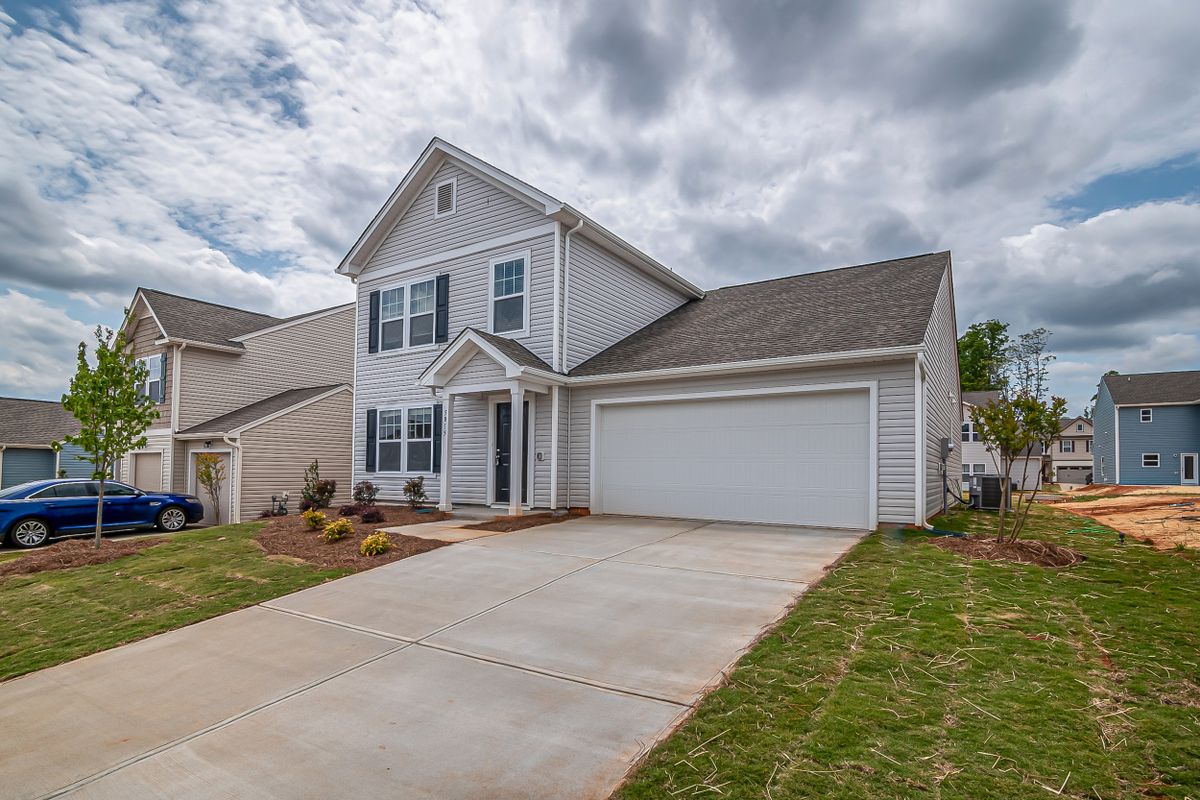
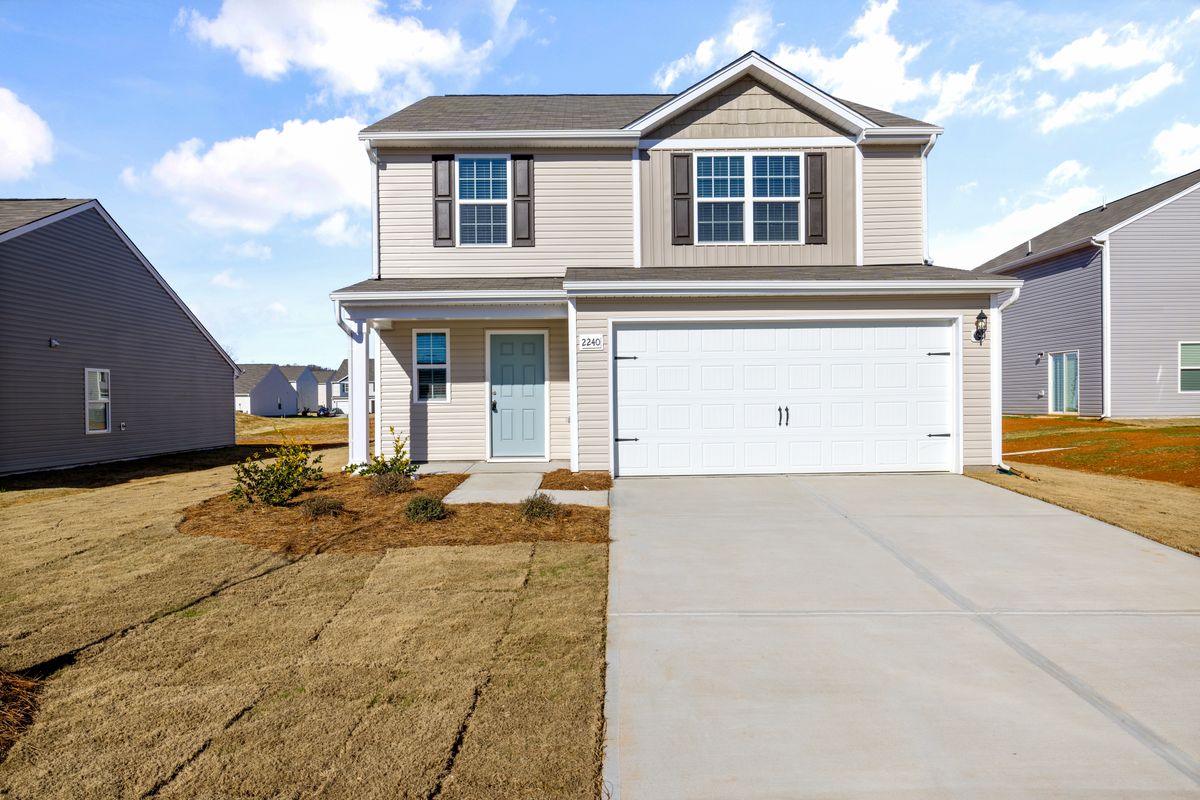
First, a lot of Katy's garage doors are on relatively young homes — but young in the way that matters is not the same as new in condition. The enormous growth along the Grand Parkway corridor and in communities such as Cinco Ranch, Firethorne, Cross Creek Ranch, and the newer sections of Katy produced tens of thousands of homes in a concentrated window. A door installed with a home in the early 2000s and a door installed last year are very different conversations; a door installed in the same two-year stretch as a hundred thousand of its neighbours is a conversation about a cohort. Those doors all came with builder-spec equipment — often single-skin or lightly insulated steel, extension springs on the lighter units, and an opener chosen to the budget of a production build rather than to the door's real duty. They have now baked through the same set of Texas summers and the same storm seasons, so they are reaching end of life together. The practical consequence is that a large share of what reads as "repair work" in west Katy is really the leading edge of a replacement wave — and catching your door at the start of that wave, rather than after the spring failure that announces it, is the cheaper position to be in.
Second, deed restrictions are a real constraint on the visible part of the job — and a new door is the most visible part of a garage. Katy's master-planned communities are governed by HOAs with architectural-control rules that homeowners routinely forget apply to the garage door. In Cinco Ranch and the other deed-restricted neighbourhoods, changes to the exterior of a home — and the front or street-facing garage door is squarely exterior — generally require written approval from the architectural committee before work begins. The rule is about colour, style, and materials matching the approved palette for the section, not about safety: a functional replacement in the same style and colour as the original is usually routine to approve, while switching from a standard raised-panel steel door to a carriage-house overlay or a different colour can need a review. The costly order of operations is to choose and order a door, then discover the style or finish is not approvable for your section. We ask where the home sits when we quote, because whether the door needs architectural sign-off changes how the job should be sequenced — approval first, then the truck.
None of that dynamic is particular to Katy at the level of the physics; what is distinctive is the scale. In a deed-restricted community off the Grand Parkway, a door an older Houston street treats as a straight swap becomes a scheduled design review, and being aware of that single step is what keeps the job from stalling.
Wind load: the reason a "cheaper" door is often not cheaper here
Katy sits in one of the wind-design zones where a garage door is not just a big panel — it is structurally the largest opening in the house, and if it fails under wind pressure the failure is rarely limited to the door. A garage door that blows in under storm wind pressurises the garage, which pushes upward and outward on the floor system and roof structure above it — the well-documented path by which garage-door failure turns a roof problem into a whole-home one. That is why Texas wind-code designations exist at all: a wind-code door has been tested and certified to withstand a specific wind-pressure load, in pounds per square foot, and the rating has to be matched to the wind zone and exposure of the actual site.
The honest, Katy-specific point is that wind rating is a whole-door property that you buy as an assembly — the sections, the struts, the reinforced end stiles, the track, and the installation all have to be the rated combination. A door sold as "wind-rated" but installed without the matching reinforcement, or onto a single-car opening where the engineer's calculation called for more, is a door whose rating is not actually in force. Because so much of the new-build Katy stock was erected to a wind code during the boom, the replacement question is not usually should I buy a rated door — it is matching the rating your home was built to, and being honest when a door in that class genuinely costs more. A rated door in the sizes common across Cinco Ranch and Grand Parkway subdivisions runs higher than an unrated door of the same appearance, and the difference is not padding; it is the reinforcement and the certified hardware. For owners who carry windstorm coverage, how the door is rated and installed can also feed into how an insurer treats the opening — which is one more reason the specification belongs on the invoice. Our guide to choosing a hurricane-rated garage door in Houston walks through the rating classes and how to read the label so you are comparing like for like.
What the new-build Katy stock actually needs
The doors being replaced across the boom subdivisions fall into a narrower range than the market's marketing suggests, and it is worth knowing what genuinely moves the needle on a Katy install rather than what the brochures push.
- Insulation is the upgrade that pays for itself here — but only when it is real. Katy garages attached to the home are rarely conditioned, and the door is the biggest uninsulated surface turned toward the sun; on a July afternoon the temperature swing across a single-skin panel is severe. A foam-core insulated door measurably cuts the heat that would otherwise pour into the garage and through the shared wall into the living area beyond. The honest caveat is that the R-value on the spec sheet is the panel's rating, not the whole door's — the windows, the bottom seal, and the uninsulated perimeter all leak — so a sensible number is worth paying for and an extreme one is often not, once the garage is only occasionally conditioned. If you condition the garage or a room sits above it, insulation earns its keep; if the garage is purely storage, the quieter operation may still justify it, but say so to yourself honestly rather than buying the top spec because it sounds better.
- Wind-rated reinforcement matters more than the cosmetic rating on the panel. Covered above — on the newer Katy stock this is frequently the difference between a replacement that is truly compliant with what the home was built to and one that merely looks the same.
- Quiet operation is a real, not a luxury, feature in this stock. Because so many of these garages sit directly under or beside the primary living areas — and because the garage entry is the door a busy family actually uses, not the front door — a door that opens loudly is a door the household hears several times a day, every day. Belt-drive openers and better rollers are the cheap end of that quietness, and a properly balanced new door is the foundation.
- The colour and style are governed by the section you live in, not your taste. Re-stated once because it is the most common cause of a stalled job: confirm the approved finish for your section before you commit to a door you cannot install. Standard raised-panel steel in the neighbourhood's neutral palette is the default that sails through; anything custom is where the review lives.
Single, double, or the wide custom bays — sizing the job right
Garage openings across the Katy build-out run a wide range, and the replacement has to be measured to the actual opening, not assumed from the door count. The standard single-car opening is roughly 8 or 9 feet wide by 7 feet tall; the standard double is 16 feet wide — though many Katy homes, particularly the taller sections and the custom lots, carry 18-foot doubles, 9-foot-tall doors, or an oversized triple bay where the garage was designed around three cars. The width and height drive not just the door panel count but the spring specification, the track radius, and whether the door needs struts or wind-load reinforcement. Two openings that look alike can require materially different doors, which is why a quote based on a photograph and a tape measurement beats one based on "it's a double."
For the purposes of the replacement conversation, the number that matters most is not the width but the clear opening height and the headroom above it. A low-headroom opening — common on some of the tighter two-storey designs where the garage door track runs close under the ceiling — needs a low-headroom track conversion, and not every door works in that space. Taller sections and the homes with a storage room or bonus space above the garage are the other direction: the ceiling is high and the door's radius and spring system have to suit it. Measure the opening and the headroom before you get far into choosing a door, because it narrows the field honestly and quickly.
What a proper installation includes — and what a thin quote leaves out
A new garage door is only as good as the installation, and the difference between a complete job and a door bolted into an opening shows up in the first year. A full residential replacement with us includes the supply and delivery of the door and its hardware, removal and haul-away of the old door and opener, re-fitting or replacing the vertical tracks where the old ones do not suit the new door's weight and rating, installing the springs and cables as a correctly sized and balanced counterbalance system, hanging the door sections so they align and seal, and fitting and programming the opener so the door operates from day one. The counterbalance is the part that is most often short-changed: a door can be installed and work, yet be out of balance because the springs were not matched to the actual assembled weight of that specific door — which shortens the life of the opener and the door alike. We balance every door we hang to the door we actually assembled, not to a generic spec.
The opener is a separate line and a genuine choice rather than an add-on. On a Katy home where the garage is the primary entry, a quiet belt-drive unit is usually the right recommendation, and a unit with battery backup keeps the door working through the storm-season outages that routinely take out west-Houston power in the summer. Whether you carry an existing opener to a new door is a case-by-case question — a recent, healthy opener can often be re-fitted, while an older opener that has baked through the same summers as the old door is usually best retired with it. We will tell you plainly which, and the Houston opener repair cost guide lays out the repair-versus-replace math for the unit itself.
Repair, one door, or wait — reading the honest timeline
The three options on the table are rarely equally urgent, and the useful question is which one the door's actual condition supports rather than which one you came in expecting.
When a section repair genuinely wins: if the damage is confined to one or two panels, the section is still in production, and the rest of the door is reasonably young, replacing the section is the cheaper honest outcome — the same logic as the Katy panel replacement page. A door that only lost a panel to a backing accident, with healthy springs and hardware, should usually be repaired, not replaced.
When a new door is the clear call: when the springs, cables, rollers, and panels have aged together — the cohort problem described above — a section repair on old hardware is a fresh part riding on a system about to fail anyway. Past the point where the parts are individually still working but collectively near end of life, the arithmetic of one new door over two years of escalating repairs flips. A door that has been through repeated spring failures, a dimpled top section from an opener straining against a broken spring, or track that has been damaged before is likewise rarely worth another repair.
When waiting is a legitimate plan: if the door works cleanly and the motivation is purely cosmetic, there is no clock. A door that opens, closes, seals, and is balanced does not need replacing this season. What we would not do is talk you into a new door to solve a problem a repair fixes — if the honest answer is a spring or a set of rollers, that is the answer, and it is on the Katy spring replacement and roller replacement pages respectively.
Cost honesty: how a Katy installation gets quoted
Published ranges for a new door are only meaningful once the opening size, the insulation level, the wind rating, and the opener choice are pinned down — the spread from a standard unrated single in a neutral finish to a rated, insulated oversized door is wide enough that a single figure would mislead. What we will always do is quote the job for the door we have actually measured, flat and in writing, before any work begins — the door, the hardware, the haul-away, the balance, the opener if you are adding one, and the labour as one number, with the specification (including the wind rating, if one applies) on the invoice. For a sense of where the ranges sit across the metro before you call, the Houston garage door repair cost guide covers the repair side of the comparison and the repair-versus-replace math; a new installation is quoted to your door's actual measurement.
Before you call: what to have ready
The fastest path to an accurate quote is a small set of details we can act on. Measure the opening width and height, and if you can, the headroom — the distance from the top of the opening to the ceiling. Note the number of doors and their sizes. If the old door has a manufacturer’s label on the inside face of a section or on the track, photograph it — it tells us the era and the general specification we are replacing. Photograph the street-facing side of the door so we can see the style and colour, and tell us which section or community the home is in if it is deed-restricted, because that is what tells us whether architectural approval is part of the job. Send those and we will give you a firm number for the diagnosed installation — a flat figure, not an hourly clock, before anyone drives out.
Our crews serve the Katy and west-Houston territory out of our Katy garage door repair base. If a door has failed and the home is exposed — a door stuck open after a spring or cable failure — that is an emergency Katy call, and we prioritize securing the opening first and settling the replacement conversation after. If the door is holding and simply old, the practical advice is the same as any measured purchase: gather the details above, get a real number, and make the call on your own timeline rather than in the middle of a failure.