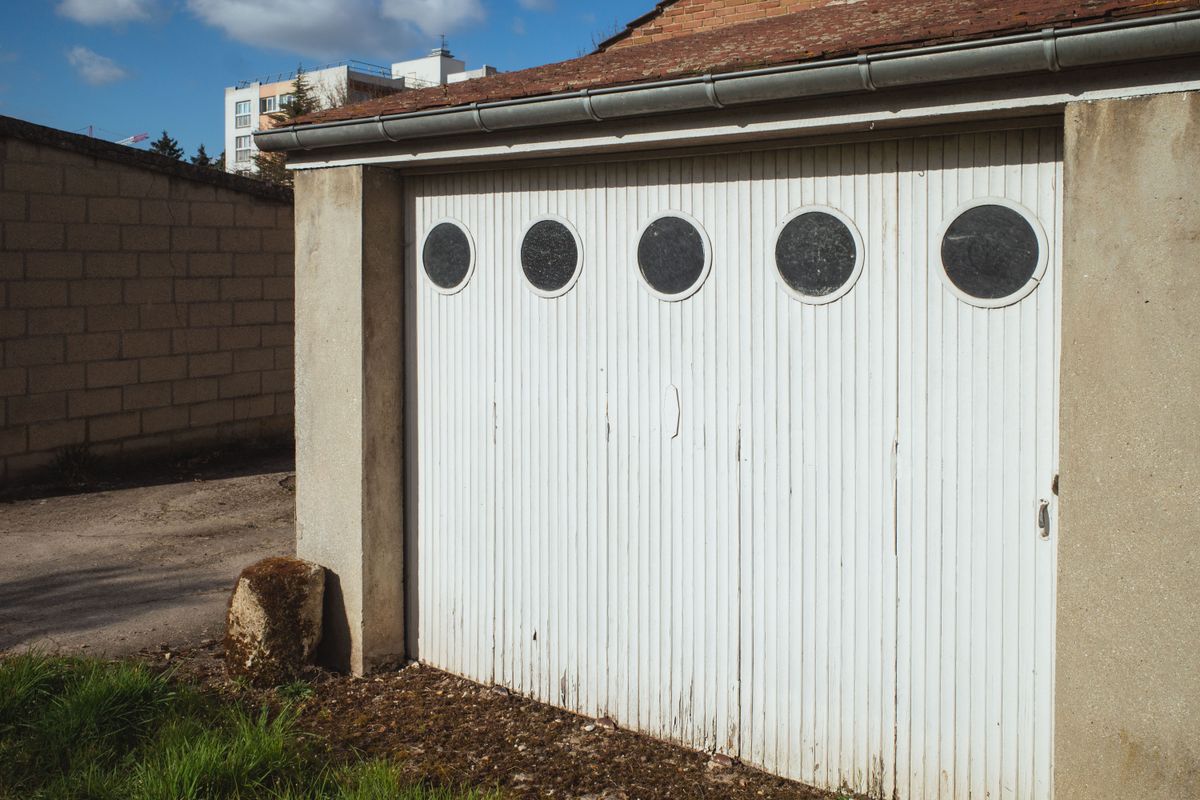
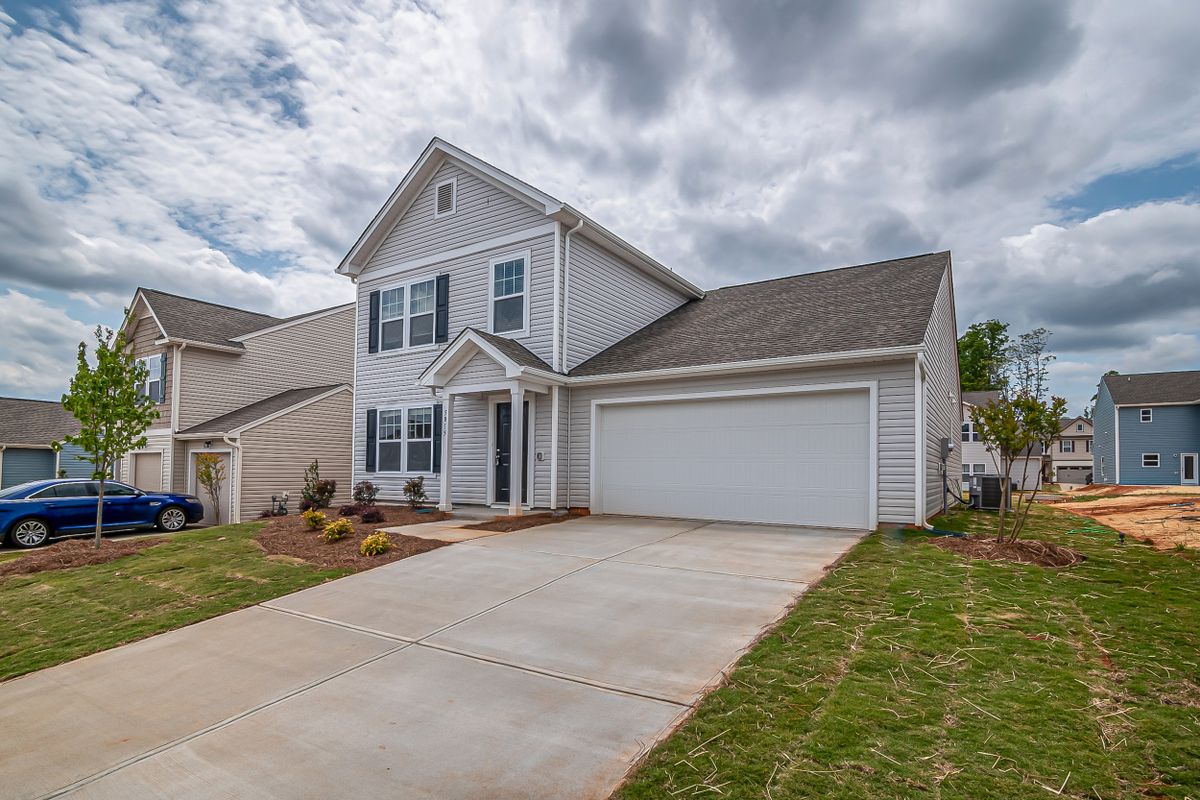
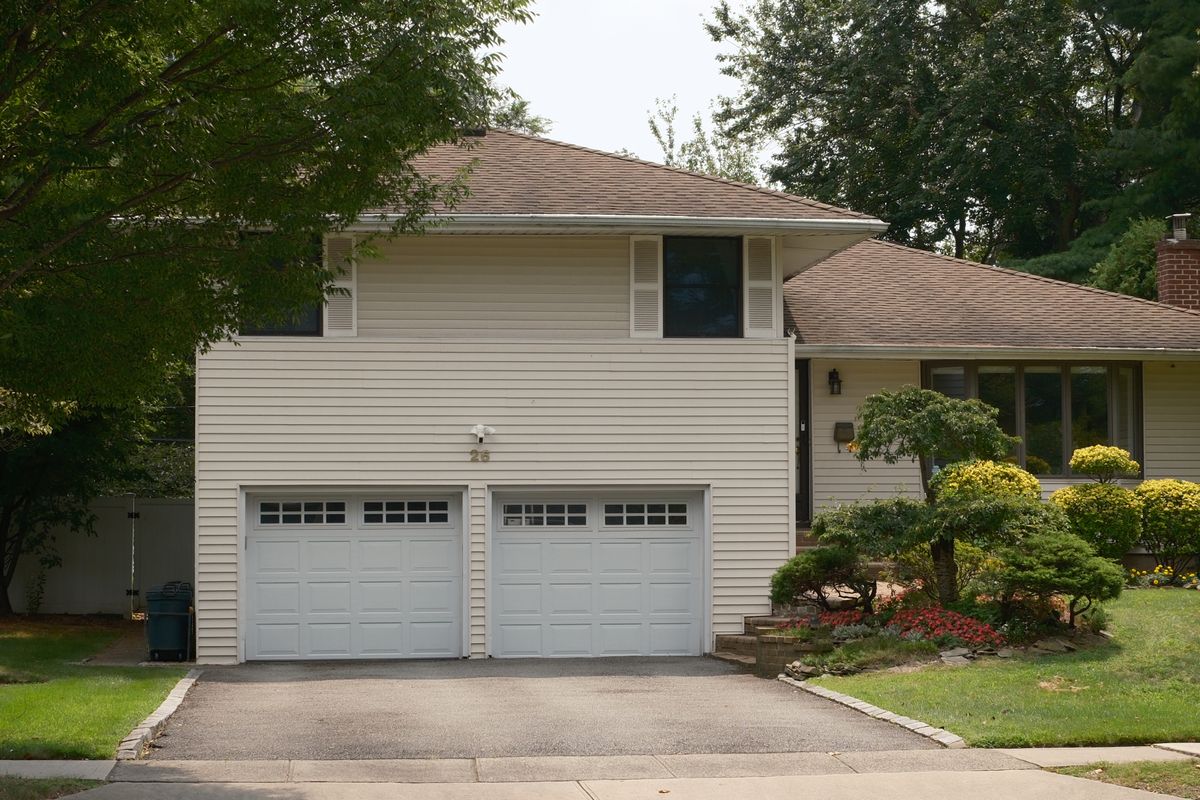
Short answer: a damaged garage door section can very often be replaced on its own, and doing so is usually a fraction of the cost of a new door — but whether it is possible in your case has almost nothing to do with how bad the damage looks. It comes down to whether the exact section is still manufactured in your door’s model, gauge, and embossing pattern. A door with one crumpled panel and a discontinued stamp pattern is a full replacement. A door with two badly folded panels that is still in production is a straightforward repair. The damage tells you very little; the label on the door tells you almost everything.
What follows is the part of this job most panel pages leave out: what a section actually is and why the bottom one is a different animal, the four ways doors in Katy specifically lose a panel, why matching a panel is the step that decides the whole job, how to identify your door in about two minutes before anyone comes out, and where the repair-versus-replace line honestly falls.
What a garage door “panel” actually is, and why that changes the repair
Most people picture a garage door as one large slab, which is why the language around this repair gets confusing. A sectional door — the standard on essentially every home in Katy — is four or five horizontal sections stacked on top of each other and joined by hinges along each seam. Those hinges are what let the door bend as it turns the radius at the top of the track and lies flat along the ceiling. Each section is an independent piece of the door, which is precisely why replacing one is possible at all.
Confusingly, the industry also uses “panel” for the decorative rectangles embossed into each section — the raised squares that make a door look like a carriage door. So a single section may contain four panels in that second sense. When you call about a damaged panel and get asked which section it is, this is why. Counting from the ground up is the convention: the bottom section is section one, and the one with the windows, if you have them, is usually section three or four.
Two more parts matter to this repair. Struts are the horizontal reinforcing bars bolted across the inside face of a section, and they are the reason a wide door does not sag in the middle when it is held only at its edges. End stiles and center stiles are the vertical reinforcements at the sides and middle where the hinges and roller brackets actually bolt on. A section that has taken a hit can look fine across its face while the stile behind the hinge is bent — and that, not the visible dent, is what makes a door bind, rub, or run crooked afterward. It is worth understanding because it explains a frustrating outcome: a cosmetically acceptable dent that still needs the section replaced, because the hardware mounting point behind it is no longer square.
The four ways Katy doors lose a panel
The vehicle. This is the overwhelming majority of panel calls, and it is almost never a dramatic collision. The usual version is a slow reverse into a door that was still coming up, or a door that started down onto a vehicle roof or an open tailgate. Because the impact is low-speed and localized, it typically destroys one or two sections while leaving the track, springs, and opener intact — which is the best-case version of this repair and the one where section replacement genuinely shines. The exception worth checking: if the door was struck while moving, the rollers may have been pulled sideways in the track, so the door needs to be checked for an off-track condition even when it appears to run.
Wind. A garage door is the largest single opening in most Katy homes, and it is a large flat surface that storm-season wind loads from both directions. The failure mode people expect is dramatic, but the common one is not: a door flexes inward hard, the center of a section bows, and afterward the door has a permanent shallow curve, a section seam that no longer closes flush, or a strut that has pulled its screws. Bowing across the middle of a wide double door is the signature. This matters more than it sounds, because a door that has been flexed once has less margin the next time, and the fix is a section and often a heavier strut rather than a cosmetic straightening. If your door was rated for wind load, see the paper problem further down — and our guide to choosing a hurricane-rated garage door covers what those ratings actually mean.
Water and the slab. This is the slow one, and it is the reason bottom sections fail here far more often than they do in drier markets. The bottom of a door sits against a concrete slab that stays damp, gets hit by sprinkler overspray, and floods briefly in heavy rain. Steel sections rust from the bottom edge and from the inside face upward; wood and composite sections swell, delaminate, and lose their grip on the bottom bracket screws. The tell is a bottom section that looks acceptable from the street and is visibly soft, blistered, or rust-streaked from the inside. Aiming a sprinkler head away from the door is one of the few genuinely free things that extends a door’s life in this area.
Heat and age. An attached Katy garage is unconditioned space, and the door itself is the hottest surface in it on a July afternoon. Insulated sections with a foam core and a thin steel skin can, over enough summers, show delamination — the skin separating from the core, which reads as a section that oil-cans or ripples under light pressure. This is not usually urgent, but it does mean an older door that also takes a hit is more likely to need the whole door than a newer one.
The part nobody tells you until the truck arrives: your panel may not exist anymore
This is the single most important thing to understand about this repair, and it is the reason two identical-looking dents get two completely different quotes.
A replacement section has to match your existing door in several dimensions at once: the manufacturer and model line, the section height, the steel gauge, the insulation type and thickness, the embossing or woodgrain pattern stamped into the face, and the finish colour. Get any one of those wrong and the repair is visible from the street forever — a section with a slightly different woodgrain in the middle of a door reads as obviously patched.
The problem is that manufacturers revise these details regularly. Stamp patterns get retired, model lines get replaced, insulation specs change, and colour formulations drift. A door installed on a Katy home during the big residential build-out of the 2000s and 2010s is frequently a builder-grade line that is simply not made in that configuration anymore. When that happens, no amount of willingness to pay produces the section — it does not exist to buy. This is also why a quote can legitimately change after someone reads the label: the availability check is the job.
There is a middle outcome worth knowing about. Sometimes a current section matches everything except the colour, because the paint has faded on the installed door. In that case a good option is to move the new section to the least visible position — usually the top, which sits in shadow under the header — and shuffle the existing sections down, so the mismatch is where nobody looks. It is a legitimate trick and it saves doors that would otherwise be replaced.
How to identify your door before anyone comes out
You can do the availability check yourself in about two minutes, and it usefully collapses the uncertainty before you talk to anybody.
Look for a manufacturer’s label. On most doors it is a sticker or a stamped metal plate on the inside face of one of the sections, commonly the bottom or the second section, near an end stile. If it is not there, check the inside of the vertical track near the bottom, and the back of the top section. What you want is the manufacturer name and any model or series number. Photograph the whole label rather than transcribing it — the small print often carries the specific numbers that matter.
Then take three photographs: the damaged section from straight on, the full door from far enough back to show all of it, and one close-up of the embossing pattern taken at an angle so the raised detail catches the light. Also measure the door’s overall width and height, and count the sections. That set is enough for anybody competent to tell you whether your section is sourceable, and it is what we ask for on a Katy panel replacement quote precisely so we are not guessing on the phone.
One section, or the whole door? The honest math
Section replacement is cheaper than a new door, and when it is available it is usually the right answer. But there are four situations where replacing the whole door is genuinely the better value, and we would rather say so than sell a repair that leaves you worse off.
When three or more sections are damaged. The labour to strip a door down to the damaged section and rebuild it upward is much of the labour of installing a new door, and sections bought individually do not carry the pricing of a full door. Somewhere around the halfway mark the arithmetic flips, and past three sections it is rarely close.
When the door is already near the end of its life. If the springs, cables, and rollers are all aged — and in this climate they age together — then a new section on old hardware is a good part bolted to a system that will need attention shortly anyway. Our Houston garage door repair cost guide lays out the ranges honestly so you can weigh that yourself, and if the springs are the question, spring replacement is a separate conversation with its own economics.
When the section is discontinued. Covered above — this is not a judgement call, it is availability.
When the door is uninsulated and you are otherwise happy to upgrade. This is the one that is genuinely optional. If a builder-grade single-skin door has been damaged and you were already thinking about the summer temperature in the garage, the incremental cost of a new insulated door over a section repair on an old one buys a real improvement, and a quieter door as a side effect. If you are not thinking about that, the section repair is fine and you should take it. See new garage door installation if you want the comparison.
Conversely, the case for repairing is strong whenever the door is reasonably young, the damage is confined to one or two sections, the section is in production, and the hardware is in decent condition. That describes most vehicle-impact calls, which is the good news in this repair.
The bottom section is a different job, and it is the dangerous one
If your damage is to the bottom section, treat it differently from any other. The bottom bracket at each lower corner is the anchor point for the lift cables, and on a closed door with wound springs those cables are under very high tension. Removing that bracket — which a bottom section replacement requires — without first unloading the springs correctly releases that energy suddenly. This is one of the two jobs on a garage door that genuinely injure people, and it is not a matter of being handy; it is a matter of having winding bars and the correct sequence.
The practical instruction is short: do not unbolt anything at the bottom corners of a garage door, do not loosen a cable drum, and if the bottom section is damaged badly enough that the door is unstable, leave the door closed and stop operating it. A bottom section replacement also means the cables come off and go back on, so it is a natural moment to have the cables and drums looked at while everything is apart, given that they have been sitting in the same damp corner as the section that rotted.
What a correct section replacement includes beyond the section itself
Swapping a section is not just unbolting one rectangle and bolting in another, and the extras are where a cheap job shows up six months later.
The door has to be rebalanced. A replacement section rarely weighs exactly what the old one did — different gauge, different insulation, a strut that was not there before, or simply a section that is not waterlogged anymore. The springs were counterbalancing the old weight. If nobody adjusts them, the door is left slightly heavy or slightly light, and a door that is out of balance wears its opener, its cables, and its rollers faster than it should. The correct check is simple and should be done in front of you: with the opener disconnected, the door should hold its position at around chest height rather than creeping up or drifting down.
Hinges and rollers at the changed seams get replaced or reused deliberately. The hinges above and below the new section are the ones that took the impact load. Reusing a hinge with an elongated pin hole puts a new section in a door that still runs rough.
The seam has to seal. Sections meet with a tongue-and-groove or shiplap profile and often a weather seal. A section that is in place but not seated leaves a light gap that lets in water and insects along the whole width of the door.
The opener travel and force settings get re-checked. A door whose weight or friction changed can start reversing partway, and the fix is a settings adjustment rather than an opener repair — but only if somebody checks. Finally, the photo-eye safety reverse should be tested before anyone leaves.
Storm ratings, insurance, and the two ways a section job goes wrong on paper
Two administrative issues are worth raising, because they cost more than the repair when they are missed.
Wind-load ratings are a whole-door property, not a section property. If your door was installed as a rated assembly, that rating belongs to the specific combination of sections, struts, track, and reinforcement it was tested and labelled as. Replacing a section with something that is not the matching rated part can compromise the rating even if the door works perfectly, which matters both for code compliance in the areas where it applies and for how an insurer views a later claim. If your door carries a wind-load label, say so before any parts are ordered — it changes what can be fitted.
Vehicle impact is frequently an insurance question. Backing into your own garage door is commonly handled under an auto or homeowner’s policy depending on the circumstances, and the decision usually turns on the repair cost against your deductible. Two practical notes. Photograph everything before any work happens, including the vehicle and the door together if that is the situation. And get the availability answer first — whether the section is sourceable changes the repair cost enormously, and therefore changes whether a claim is worth filing at all. If the damage is cosmetic and shallow, our dent repair cost guide covers where the line falls between a dent worth living with and a section worth replacing.
What we do on a Katy panel call
We start with the label and the photographs, because until the section is confirmed available nothing else can be priced honestly. If it is available, you get a flat number for the section, the hardware at the affected seams, the rebalance, and the labour, before any work starts. If it is not available, we say so plainly and price the alternatives — the shuffle-the-sections option where it applies, or a new door — rather than fitting a section that will not match.
We work Katy and west Houston out of our Houston garage door repair base, and the surrounding communities those pages border. If the door is currently stuck open and the house is exposed, say that first, because that changes it from a scheduled visit to an urgent Katy call. And if the door is closed and stable, the honest advice is to leave it that way until the section question is settled — a damaged door that is still being cycled tends to turn a one-section job into a two-section job. An annual tune-up will not stop a car reversing into a door, but it is the thing that keeps the rest of the system from aging into the repair alongside it, and it is the cheapest visit we make.